News · Quality control
Leather thickness gauges: a small gap makes a big difference
Save $20 on a thickness gauge. What could it cost you on an entire batch?
A real case of conflicting readings
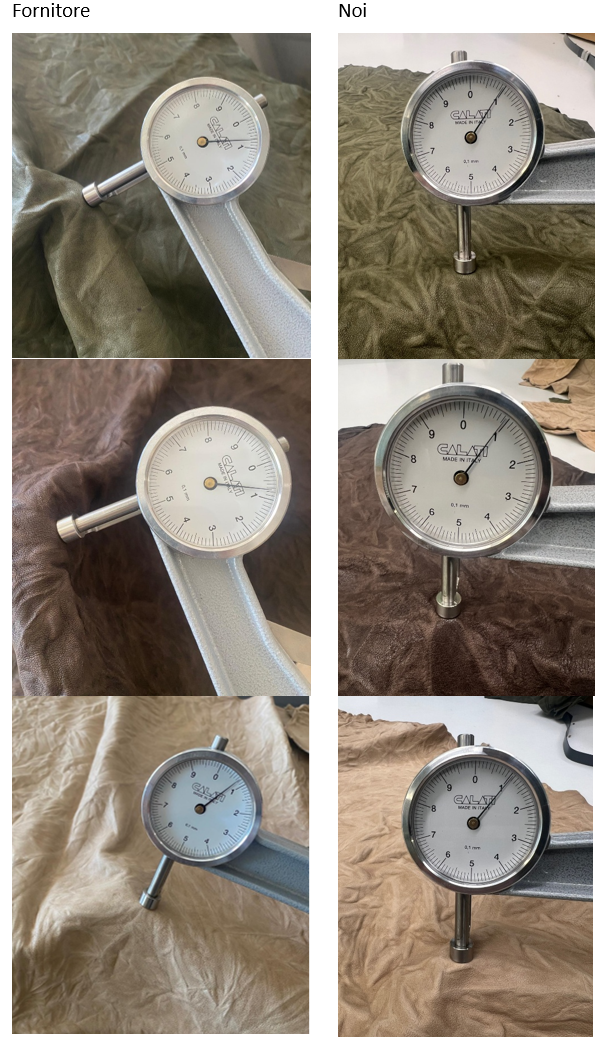
During a recent technical consultation, a customer reported readings of approximately 0.7–0.8 mm with one instrument and 1.0–1.1 mm with another. The case is presented without identifying the businesses involved or their locations.
These values need investigating. The photographs and reported readings do not constitute a controlled test at the same point on the leather. The measurement procedure must also be compared before attributing the gap to an instrument.
Why thickness matters in leather quality control
Underestimating thickness can affect how leather is valued. For the buyer, material thicker than agreed can mean processing difficulties, rework and delivery disputes.
Construction differences: ask the manufacturer to check
The photos revealed construction differences requiring further investigation. Appearance alone does not establish that an instrument is counterfeit or confirm its accuracy. It is a reason to request a technical assessment.
What to check before comparing two gauges
Origin
Establish the instrument’s provenance and check the model.
Condition and calibration
Check the zero setting, contact surfaces and operation.
Measuring characteristics
Compare contact pressure and contact geometry.
Procedure
Measure the same point under the same conditions, following the operating instructions.
A small gap makes a big difference
A small saving on the purchase can become a larger production cost. Reliable quality control starts with a suitable instrument and a consistent method.
Unsure whether your CALATI thickness gauge is genuine, or why readings differ? Contact us for help checking the model and measurement procedure.